oral-cancer-screening-early-signs-prevention
Oral Cancer Screening: Early Signs, Prevention & When to See a Dentist
Oral cancer is an extremely severe dental problem nowadays, and not every individual knows about the early symptoms and the ways of its prevention. It has been proved that early diagnosis can significantly influence the results of the treatment and the survival rates, and the problem of oral cancer screening is a mandatory component of your dental check-ups. Here we discuss the symptoms of oral cancer at its early stages, how to successfully prevent it as well as the importance of seeking dental care before it is too late.
What Is Oral Cancer?
Oral cancer is the cancer formed on the tissues of the mouth, lips, tongue, cheeks, gums or floor and roof of the mouth. It can also impact the throat and the pharynx. Although it may happen to anyone, some lifestyle and environmental factors are very risky. It is possible to be aware of these risks and to identify the initial symptoms in order to be able to take quick action and find prompt treatment.
Why Early Detection Matters
Among the most significant problems of oral cancer is that the initial symptoms of the disease may be very slight and may remain unnoticed. The problem is that, in case of the appearance of the symptoms, the disease can be at its final stages. Regular screenings can identify the disease early enough and:
● Enhance effective treatment.
● Minimize the invasive procedures.
● Improve the effectiveness of complete recovery.
● Enhance post-discharge living.
The screening process is easy, painless and can be carried out by your dentist on a regular check-up basis.
Oral Cancer: Common Early Signs and Symptoms.
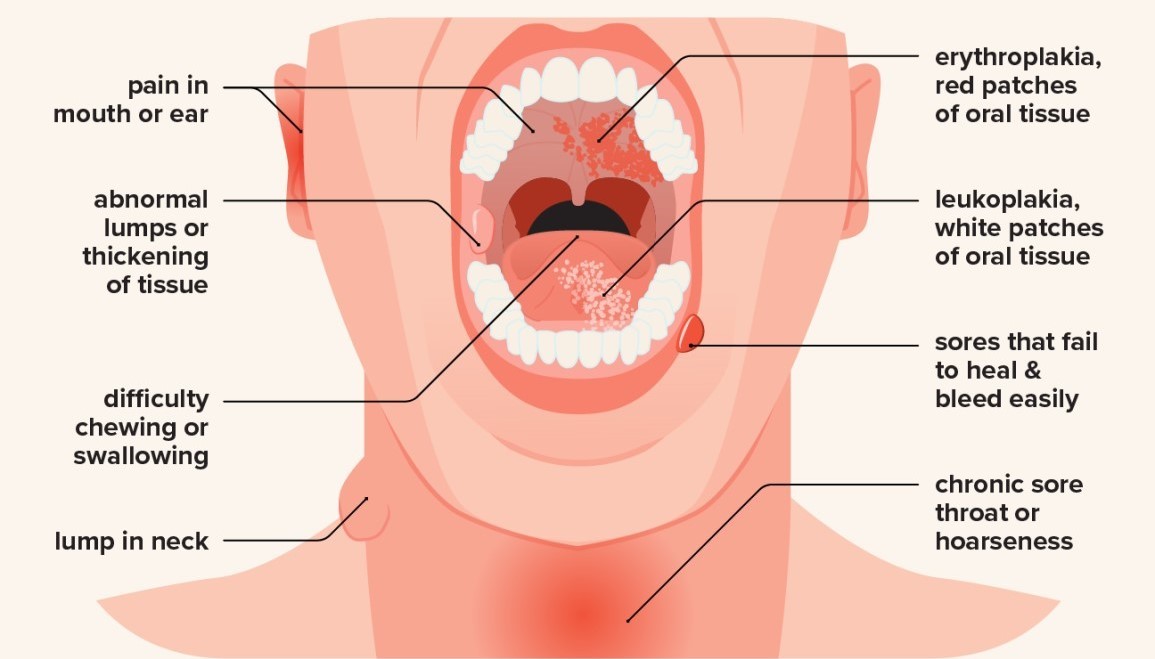
The initial step in early interventions is the detection of the early stages of oral cancer. Being not necessarily the indicators of a malignancy, they should be noted with seriousness in case they last longer than two weeks. The early signs are normally some of the following:
● Unusual Sores or Ulcers
Sores or ulcers that are not cured in two to three weeks in the mouth are warning signs. These can be like canker sores but they take a longer period and can be painful.
● Red or White Patches
Tongue, gums, or mouth lining red (erythroplakia) or white (leukoplakia) patches are to be assessed. These patches may even be precancerous.
● Lumps or Thickened Areas
The mouth or lips should check any lump, bump or thickened region. Such growths can be painless but as time goes by they can develop.
● Problem with Difficulty Chewing or Swallowing.
In case you feel uneasy or something being stuck in your throat when swallowing, it might be a sign of an oral health problem such as cancer.
● Changes in Voice or Speech
Other symptoms should not be neglected even when persistent hoarseness or speech changes are observed.
● Loose Teeth or Pain
Teeth that shake without a visible reason, pain in the mouth and jaw that cannot be explained, may be connected with certain issues.
● Numbness or Tingling
Symptoms of nerve involvement include numbness in the tongue, lips, or other parts of the mouth and this is something that would need immediate attention.
Who Is at Higher Risk?
Although any person may have oral cancer, there are some risk factors that dramatically predispose to the development of the disease:
Tobacco Use
Tobacco use, smoking cigarettes, cigars, pipes and smokeless tobacco products are highly likely to increase the risk of oral cancer.
Alcoholic Drinking.
One of the known risk factors is heavy drinking especially when it is used together with tobacco.
Sun Exposure
Lip cancer is also more prevalent in people exposed to the sun over an extended period of time without proper protection.
HPV Infection
Human Papillomavirus (HPV), in particular, HPV-16, is associated with the higher risk of cancers of the oropharynx.
Poor Oral Hygiene
Long-term irritation of broken teeth, poorly fitted dentures, or improper oral care can be a factor to cellular transformation of the mouth.
Age and Gender
The prevalence of oral cancer is increased in people above 40 years and in the past, it used to be higher among males. Nonetheless, the rate among women has been on the rise.
Oral Cancer Prevention: Simple Tricks.
It is always better to prevent than cure. It is possible to prevent oral cancer by adopting healthy lifestyle habits.
Quit Tobacco in All Forms
The most effective method of reducing the risk is to quit using tobacco, either smoked or smokeless. In case you need some assistance, discuss termination tools with your dentist or medical professional.
Limit Alcohol Consumption
The alcohol consumption can be reduced or avoided, and your risk can be minimized, especially when you are also a tobacco user.
Eat a Nutritious Diet
Antioxidants and vitamins that are found in a high content of fruits and vegetables are useful in protecting the cells within your mouth.
Latique Your Lips in the Sun.
Reduce sun exposure by using lip balm containing SPF, wide brimmed hat and avoid sunbelt hours.
Hygiene In Oral Care.
Brush and floss every day, change the old toothbrushes and go to your dentist regularly to clean and check your teeth.
HPV Vaccination
Discuss HPV vaccine with your medical practitioner and this may help reduce the chances of oral cancers caused by HPV.
Timing of Dentist Screening.
Oral health- check-ups are important in preventing disease in the mouth- and early diagnosis of cancer. Your dentist is able to conduct both visual and physical check up to identify the suspicious areas well before the symptoms escalate.
Schedule a dental visit if:
● You find any sores, patches or lumps in your mouth that will not heal.
● You experience pain or numbness which is not fading away.
● You find it hard to chew, swallow or talk.
● You suffer unexplainable bleeding on your mouth.
● You would like to have a regular oral cancer examination with your regular check-up with the dentist.
Although you might not experience any of these symptoms, a screening of the oral cancer should be done during routine dental checkups after every six months.
What to Expect of an Oral Cancer Screening.
Oral cancer screening is a painless, fast and is usually part of your routine check-up in the dentist. Your dentist will:
● Examine the lips, tongue, cheeks, floor of mouth and roof of the mouth.
● Aesthetic lumps or abnormalities.
● In case it is mentioned, use advanced light-based tools or dues.
● Order additional testing (biopsy or referral) when necessary.
Timely diagnosis provides you with a lot of benefit in both therapy effectiveness and quality of life.
Conclusion
Oral cancer is a severe illness, yet not an issue that should not be a secret. With early warning signs, preventive routines and frequent screening during your dental visit, you will be able to safeguard your mouth and general well being.
Learn early signs of oral cancer, prevention tips, and when to visit a dentist for oral cancer screening to protect your oral and overall health.

Leave A Comment